Organic traffic reports are alarming marketing teams and founders across the UK and US. Sessions that once numbered in the thousands have, in some cases, dropped to a fraction of their previous levels. The instinct is to blame Google’s AI Overviews, and often that instinct is correct. But not always.
AI Overviews are a real and measurable cause of click suppression for many informational queries. The evidence is substantial and consistent across multiple independent studies. What the evidence also shows, however, is that the pattern is specific: it concentrates on certain query types, certain page formats, and certain positions in the results. Not every traffic drop is an AI Overview problem. Diagnosing which kind of drop is happening is the difference between an effective response and an expensive misdirection.
TL;DR: AI Overviews are suppressing clicks on informational queries, with independent studies showing organic CTR drops of between 34% and 61% on affected searches. But impressions are often rising, not falling. The right response is to diagnose by query type and page intent in Google Search Console, identify which pages are genuinely exposed, and shift effort toward citation-worthy content and stronger commercial pages rather than abandoning SEO entirely.
Are AI Overviews Killing Your Traffic?
Yes, for informational queries, the click suppression is real and well-documented. Ahrefs analysed 300,000 keywords and found that the presence of an AI Overview now correlates with a 58% lower average click-through rate for the top-ranking page. A separate study tracking 25.1 million organic impressions across 42 organisations found that organic CTR on AI Overview queries fell from 1.76% to 0.61%, a decline of 61%, between June 2024 and September 2025.
The critical nuance: impressions on those same queries were often rising. Google was showing the page to more users than ever. It just stopped sending them the click.
This is the distinction that separates AI Overview impact from other traffic problems. A ranking drop, a technical crawl issue, a penalty, or a seasonal dip all behave differently in the data. AI Overview suppression has a specific fingerprint: impressions hold or grow, while CTR and clicks fall on the same queries.
There was a partial rebound in early 2026, with organic CTR on AI Overview queries recovering to around 2.4% in February 2026, though this still sits below pre-AIO baseline rates. The effect is significant and ongoing, but it is not static. That matters for how teams frame their response.
| What AI Overviews change | What they do not automatically mean |
|---|---|
| CTR drops on informational queries | Your rankings have fallen |
| Google satisfies intent on the results page | Your content is low quality |
| Clicks per impression decline at position 1-3 | All traffic is gone |
| Impressions may increase while clicks fall | Recovery is impossible |
| Informational pages lose click volume | Commercial and branded pages are equally exposed |
| Zero-click searches rise across the board | SEO investment has no return |
The data is clear: AI Overviews are a genuine traffic suppressor for informational content. They are not, however, a universal kill switch for organic search. Understanding which of those two situations applies to a given site requires a proper diagnosis.
How to Tell If AI Overviews Caused Your Drop
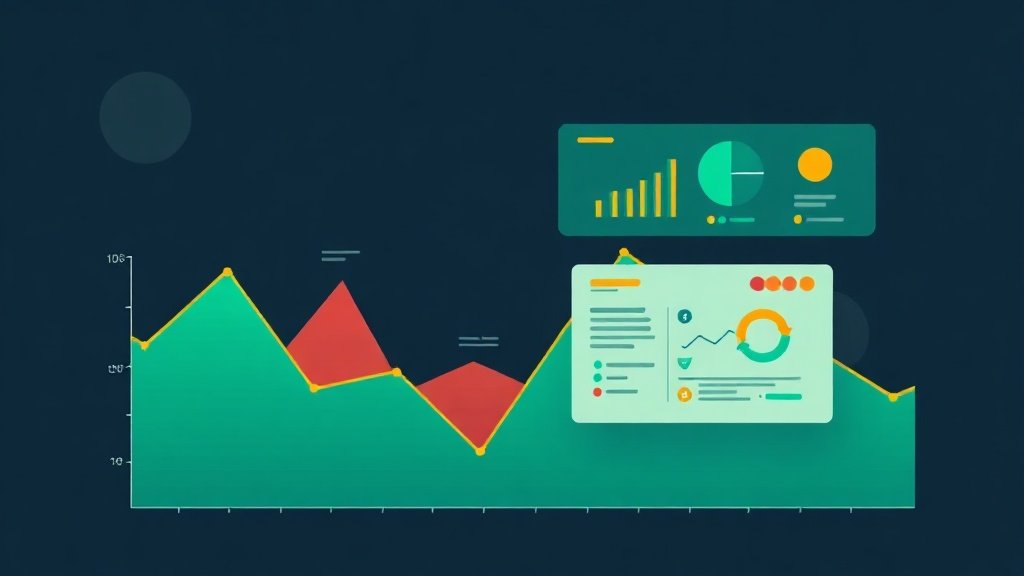
The clearest signal is a divergence between impressions and clicks in Google Search Console. When impressions remain flat or rise while clicks and CTR fall on the same set of queries, that pattern points strongly toward AI Overview suppression rather than a ranking or technical problem.
Use the following diagnostic process to confirm or rule out AI Overviews as the cause.
Step-by-Step Diagnostic Checklist
-
Open Google Search Console and set a date range comparison. Compare the 90 days before and after May 2024, when AI Overviews began rolling out broadly in the US, and September 2024 for the UK and global expansion.
-
Filter by query type. Sort your top queries by impressions. Identify which are informational in nature (“what is”, “how to”, “why does”, “best way to”) versus branded, navigational, or transactional.
-
Check the impressions vs clicks divergence. If impressions are stable or growing but clicks are declining on the same queries, that is the AI Overview fingerprint. If impressions also fell, the cause is more likely a ranking change, algorithm update, or technical issue.
-
Segment by device. AI Overview suppression tends to be heavier on mobile. If the CTR drop is concentrated on mobile informational queries, that reinforces the diagnosis.
-
Test the queries manually in Google. Search for your top affected queries and check whether an AI Overview appears. If it does, your page is competing with a zero-click response generated from your own (or a competitor’s) content.
-
Check for algorithm update overlap. Cross-reference your traffic dates against Google’s confirmed update history in Google Search Central. A simultaneous core update can compound or mask AI Overview effects.
Symptom vs Likely Cause
| Symptom in Search Console | Most likely cause |
|---|---|
| Impressions up, clicks down, CTR falling | AI Overview click suppression |
| Impressions and clicks both falling | Ranking drop or algorithm update |
| Specific pages losing traffic, rankings unchanged | AI Overview on those query types |
| Branded queries losing traffic | Navigational change or brand awareness shift |
| Sitewide drop across all query types | Technical issue, penalty, or major core update |
| Traffic drop on transactional pages | Competitive SERP change or paid cannibalisation |
The distinction matters because the fixes are different. Chasing rankings on a page that is already ranking well but losing clicks to an AI Overview is wasted effort. The intervention has to address citation, not position.
Which Pages Are Most Affected?
Not all pages face equal exposure. Research published by Search Engine Land confirms that AI Overviews trigger on informational queries at a far higher rate than on branded, transactional, or navigational searches. The pages most at risk share a common characteristic: they answer a question that Google can summarise in a paragraph without the user needing to visit the source.
The real risk is this: pages that were built to define, explain, or introduce a topic are now competing with Google’s own synthesised answer. If the page’s entire value proposition is the definition it provides, the AI Overview has already delivered that value before the click happens.
Pages built around deeper evaluation, original data, specific decisions, or commercial intent are considerably more resilient, because Google cannot replace the action the user needs to take.
Page Type Risk Matrix
| Page type | AI Overview risk | Reason |
|---|---|---|
| “What is X” definitions | Very high | Easily summarised in one AI paragraph |
| How-to guides (basic) | Very high | Step-by-step answers satisfiable on the SERP |
| FAQ pages | High | Direct Q&A format feeds AI Overview structure |
| Glossary entries | High | Single-concept answers with no action required |
| Beginner guides | High | Introductory content is easily synthesised |
| Comparison pages (in-depth) | Medium | Requires evaluation; harder to fully summarise |
| Service and product pages | Low | Requires a decision or action beyond the SERP |
| Branded pages | Low | Navigational intent; AI Overviews rarely trigger |
| Local and geo-targeted pages | Low | Location-specific intent resists generic synthesis |
| Original research / data | Low | Cannot be replicated without the source |
The implication for content strategy is direct: pages that exist purely to satisfy curiosity are the most exposed. Pages that exist to support a decision, a purchase, a comparison, or a conversion are far more protected. Shifting the content mix towards the latter is not just a defensive move; it is also where the higher-intent audience already lives.
For a deeper look at how Answer Engine Optimization restructures content for AI-era visibility, the principles apply directly to reducing exposure on the most vulnerable page types.
What Can You Do About It?
The response to AI Overview suppression is not to fight Google’s AI or to abandon informational content entirely. It is to make content that AI Overviews cannot replace, and to ensure that when an AI Overview does appear, the site being cited is yours.
Brands cited in AI Overviews earn 35% more organic clicks and 91% more paid clicks than non-cited brands on the same queries, according to the Seer Interactive study referenced above. Citation is not a consolation prize. It is the new position one.
Prioritised Response Actions
-
Audit your informational pages against the risk matrix above. Identify which pages are losing clicks to AI Overviews versus which are losing clicks for other reasons. Do not apply the same fix to both.
-
Upgrade vulnerable pages beyond the definition. A page that only defines a term is replaceable. A page that defines the term, shows how it applies to a specific scenario, includes original data or a case study, and leads into a decision framework is not. Add the layers that AI cannot synthesise from generic sources.
-
Strengthen internal routing from informational to commercial pages. If a user does click through from an AI Overview result, they should immediately encounter a clear path to a service page, a comparison, or a conversion point. The clicks that do arrive are higher-intent than they used to be; the page architecture should reflect that.
-
Build for citation, not just ranking. Optimising to rank in Google AI Overviews requires structured, authoritative, clearly attributed content. Pages that are cited in AI Overviews benefit from the visibility even when the user does not immediately click.
-
Set up AI visibility tracking. Google Search Console does not separate AI Overview clicks from standard organic clicks. Dedicated tracking is needed to measure citation frequency and AI-assisted demand. Tools such as Searchable provide this measurement layer. Kobestarr Digital’s guide on how to track AI visibility covers the full methodology.
30-Day Response Plan
| Week | Priority action |
|---|---|
| Week 1 | Run the GSC diagnostic; identify which pages show the AIO fingerprint |
| Week 2 | Audit top 10 affected pages; classify by risk level and upgrade potential |
| Week 3 | Rewrite or expand the two highest-traffic vulnerable pages with original depth |
| Week 4 | Set up AI visibility tracking; establish a citation baseline for target queries |
How Do You Win in a Zero-Click World?
Zero-click does not mean zero value. According to SparkToro and Similarweb data reported by Search Engine Land, approximately 58.5% of US searches and 59.7% of EU searches in 2025 ended without a click. That figure is rising. But the brands that appear in those zero-click results are still building awareness, recall, and downstream branded search volume.
The shift in thinking required is this: visibility and clicks are no longer the same metric. A brand cited in an AI Overview on a high-volume query is influencing the user’s decision even without receiving the click. When that user’s intent deepens, they search for the brand directly.
Principles for Winning in an AI-First Search Environment
-
Be the cited source, not just the ranking page. Structured, authoritative, well-attributed content is more likely to be pulled into an AI Overview. The AEO agency approach centres on building this citation authority systematically.
-
Invest in commercial intent coverage. Service pages, comparison guides, and decision-support content are less exposed to AI Overview suppression and more directly connected to revenue.
-
Measure what AI search actually delivers. Tracking impressions, clicks, and rankings alone misses citation volume, assisted conversions, and AI-driven brand recall. The measurement framework needs to expand.
-
Treat zero-click as top-of-funnel. A user who sees a brand cited in an AI Overview and does not click is not lost. They are being introduced. The conversion happens later, via direct or branded search.
The businesses that will struggle most are those that treat the current drop as a temporary anomaly and wait for Google to reverse course. The businesses that will adapt fastest are those that reframe success around cited visibility, higher-intent content, and measurement that connects AI presence to actual pipeline.
Ready to find out exactly where your site stands? Get your free AI visibility audit and see which pages are most exposed, which are citation-ready, and what the 30-day response looks like for your specific situation.
Key Takeaways
-
AI Overviews are a proven cause of CTR suppression on informational queries, with independent research showing declines of 34% to 61% depending on position and query type.
-
The diagnostic fingerprint is specific: impressions hold or rise while clicks and CTR fall on the same queries. If impressions also dropped, the cause is likely elsewhere.
-
Informational pages (“what is”, “how to”, glossaries, FAQs, beginner guides) carry the highest risk. Service, branded, and transactional pages are significantly more resilient.
-
Citation in an AI Overview is more valuable than ranking without citation. Brands cited in AI Overviews earn measurably more clicks than non-cited brands on the same queries.
-
The right response is a page-level audit, targeted content upgrades, stronger commercial intent coverage, and AI visibility tracking, not a wholesale retreat from organic search.
Written by Kobi Omenaka, founder of Kobestarr Digital and a practitioner in Answer Engine Optimization and AI search visibility. Kobi works with founders and marketing teams to diagnose AI-era traffic shifts and build citation-first content strategies grounded in data.
Frequently Asked Questions
Do AI Overviews reduce clicks? Yes. Ahrefs found that AI Overviews correlate with a 58% lower average CTR for the top-ranking page, and a separate study tracking 25.1 million impressions found a 61% organic CTR decline on AI Overview queries. The effect is concentrated on informational queries.
How do I check if AI Overviews caused my traffic drop? Open Google Search Console and compare impressions versus clicks over the past 12 months. If impressions are stable or rising while clicks and CTR are falling on informational queries, that is the AI Overview pattern. Manually test your top affected queries in Google to confirm whether an AI Overview is appearing.
Will my traffic recover? Partially. Organic CTR on AI Overview queries showed a rebound from its lowest point in mid-2025 to around 2.4% by February 2026, but remains below pre-AIO levels. Full recovery to pre-2024 click volumes is unlikely for purely informational content. Recovery through citation-first content and stronger commercial pages is achievable.
Should I block AI bots to protect my traffic? Blocking Google’s AI crawlers (such as Googlebot) would remove the site from both AI Overviews and standard search results. For most sites, this is counterproductive. Blocking third-party AI training crawlers is a separate decision and does not affect Google Search or AI Overview visibility.
How do I adapt my content to perform in AI search? Focus on content that goes beyond definitions: original data, specific examples, decision frameworks, and expert perspective. Structure content clearly with direct answers followed by depth. Ensure commercial and service pages are strong enough to convert the higher-intent clicks that do arrive. The full approach is covered in the AEO guide.